
How to Talk to Someone with Dementia Without Causing Frustration
Submitted by –
 By Tyler Zanini, Founder at Memoryboard
Tyler started Memoryboard to provide a simple and effective solution for families like his who want to help their loved ones with memory loss stay connected. Check out Memoryboard, or contact Tyler via email.
Memoryboard simplifies communication by making it simple and dignified. It helps empower those dealing with cognitive issues to feel more independent and can assist in calming their nerves when anxious.
Talking to someone with dementia can feel hard at times.
A simple question may come up again and again. A reminder may be forgotten quickly. A conversation may become confusing for both the caregiver and the person living with dementia.
The goal is not to have a perfect conversation. The goal is to help your loved one feel safe, calm, and respected.
1. Use short, simple sentences
Long explanations can feel overwhelming.
Instead of saying: “Remember, your appointment is after lunch, and then your daughter is coming later.”
Try: “Your appointment is after lunch.”
Pause before adding more information.
2. Speak slowly and calmly
Your tone matters. Try to speak slowly, use a calm voice, make gentle eye contact, give time to respond, and avoid correcting too quickly.
A calm voice can help lower stress.
 3. Ask one question at a time

Too many choices can cause confusion.
Instead of: “What do you want for lunch?”
Try: “Would you like soup or a sandwich?”
Simple choices are easier to answer.
4. Avoid saying “Don’t you remember?”
This can make someone feel embarrassed or upset.
Instead of: “Don’t you remember?”
Try: “That’s okay. Let me remind you.”
This keeps the conversation kind and respectful.
5. Focus on comfort, not correction
A person with dementia may say something that is not accurate. Correcting every detail can lead to frustration.
If they say, “I need to go home.”
Try: “You want to feel comfortable. I’m here with you.”
Respond to the feeling first.
6. Use visual reminders
Spoken reminders may be forgotten quickly. Visual cues can help support daily communication.
Examples include a daily schedule, family photos with names, meal reminders, medication reminders, appointment notes, and simple messages like “You are safe” or “Lunch is at 12:30.”
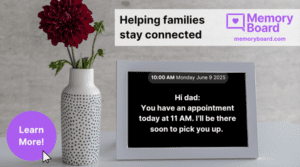
Tools like Memoryboard can help families keep reminders, photos, routines, and reassuring messages visible in one place. It can support communication without making the person feel corrected.
Helpful phrases to use
| Instead of Saying | Try Saying |
| I already told you. | Let me remind you. |
| You forgot again. | That’s okay. I can help. |
| That’s wrong. | Let’s look at it together. |
| Calm down. | You’re safe. I’m here. |
| You can’t do that. | Let’s do this together. |
Final takeaway
Talking to someone with dementia takes patience.
Use simple words. Speak calmly. Ask one question at a time. Use reminders they can see.
Small changes can make daily conversations feel easier, safer, and more connected.
By Tyler Zanini, Founder at Memoryboard
Tyler started Memoryboard to provide a simple and effective solution for families like his who want to help their loved ones with memory loss stay connected. Check out Memoryboard, or contact Tyler via email.