
How to Vet Adult Day Programs Before Your First Visit — A Caregiver’s Safety and Quality Checklist
 Submitted by Beth Rush
Founder and Managing Editor
Body+Mind Magazine
This article will help guide you through the process of finding the right adult day program for someone living with dementia, Alzheimer’s disease, or other dementias, which requires careful research.
Finding the right adult day program for someone living with dementia, Alzheimer’s disease, or other dementias requires careful research. You need a safe, engaging place that employs people who truly understand memory care. Use these vetting strategies before your first visit so you can walk in prepared, ask the right questions, and make a confident choice.
Start with Core Safety and Licensing
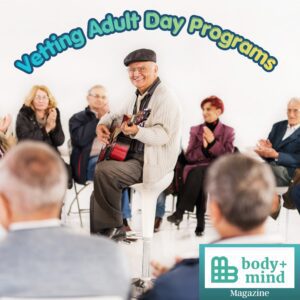 Your first step happens from home, before you schedule any visits. Vet foundational credentials to create a shortlist of programs worth your time. According to AARP, adult day services are a team effort, and that partnership begins by ensuring the program meets state and local standards.
Start by confirming that the center holds an updated state license or certification. Ask about their staff-to-participant ratio, as lower ratios mean more individualized attention. Programs serving people with dementia often assign one staff member to six persons, per state standards.
Registered nurses or other health professionals should either work on-site or remain on call for medical needs throughout the program day. The center needs experience with memory loss and the ability to manage specific needs, such as wandering prevention and incontinence care. It is beneficial to find an operating schedule that aligns with your work hours and to confirm transportation arrangements to and from the facility early in your research process.
Observe the Environment for Physical and Emotional Safety
 The feel of a place matters as much as the paperwork. When you tour a facility, pay attention to the things you see and hear. The environment should support both physical safety and emotional comfort for people living with dementia.
Walk through common areas during active hours to better understand daily routines and how staff interact with participants. Notice whether the space feels welcoming and participants appear engaged. As you tour, listen to noise levels. Spaces should feel peaceful without being overstimulating. These observations reveal more about the quality of daily care and attention participants receive than any brochure can.
Secure entrances and exits prevent wandering while maintaining dignity. Look for clean common areas, as these reflect attentive management and reduce health risks. Ramps, handrails, and wide doorways should accommodate mobility devices, and bathrooms need grab bars with adequate space for assisted care.
Evaluate the Quality of Activities and Daily Engagement
 Adult day programs should provide meaningful activities that match each person’s abilities and interests. A key benefit of such programs is relieving the isolation and loneliness many people with dementia experience through social opportunities. Experts have defined person-centered care as programs that tailor activities to individual needs.
Quality programs design activities around what participants can do successfully. Staff should adapt exercises, crafts, music or conversation to different cognitive levels. Watch for signs that attendants know participants well enough to suggest activities based on personal history and preferences.
Determine whether the program offers different activities throughout the week or repeats the same routine. Daily schedules should include variety to keep participants engaged. You should also note how staff members adapt activities for different cognitive levels and personal interests.
 Activities that connect to participants’ past hobbies, careers or cultural backgrounds provide deeper engagement. A former teacher might enjoy reading groups, while someone who loves cooking could help with meal preparation. Opportunities for exercise, dancing, gardening or other physical activities suited to various ability levels keep people healthy and can improve mood and sleep quality. Movement-based options can benefit both physical and mental well-being.
How to Vet Staff Training and Dementia Expertise
Staff quality greatly impacts a program. Even beautiful facilities can fall short without trained, compassionate caregivers who understand dementia care. Borrow strategies from healthcare recruiters to assess whether a program hires and retains top talent.
During job interviews, healthcare facilities evaluate candidates on certifications, emergency protocols, and specialized training. The questions employers prioritize reveal the same standards you should look for when evaluating adult day programs.
 One way to assess quality is by reviewing what employers look for when hiring top candidates. Programs that hire staff with dementia-specific credentials, Daisy Awards, or specialized training demonstrate their commitment to quality dementia care services. Ask these questions about staff qualifications:
- What training do staff receive specifically for working with people who have Alzheimer’s or other forms of dementia?
- How does the team handle medical emergencies, such as falls, seizures or sudden illness?
- Does the center conduct background checks and verify CPR certification for all staff members?
- What security features and protocols prevent participants from leaving the building unsupervised?
- Does the program celebrate or recognize employees who pursue additional certifications or training?
Look for a Partnership Approach to Care
 Strong programs function as partners with families rather than service providers operating in isolation. For example, the U.S. Department of Veteran Affairs’ Adult Day healthcare program is built on skilled services and case management, highlighting the value of a coordinated approach among providers and families.
The best centers welcome family input and make time for regular updates. You know your loved one best and can share details about preferences, triggers, and comfort strategies that staff might not discover on their own. Ask how the program incorporates family knowledge into daily care.
Ask how families participate in creating and updating individualized care plans. These plans should evolve as your loved one’s needs change over time. Programs should have a clear system for sharing daily updates, whether through text messages, emails, phone calls, or communication notebooks.
 Look for centers that offer caregiver education, support groups, or counseling. These resources can help you manage stress and learn new care techniques. When challenges arise, programs should involve families in finding solutions since partnership means working together when problems need attention.
Watch for warning signs that suggest poor management or insufficient quality standards. When staff members constantly change due to high turnover, participants lose the benefit of familiar faces and consistent care. Programs that give vague answers about daily activities or safety procedures likely lack structure. Without planned social engagement during the day, participants may spend their time idly rather than engaging in meaningful interactions.
Quick Adult Day Program Vetting Checklist
Use this condensed checklist as you tour facilities. These action items capture the most important evaluation criteria.
- Confirm state licensing and verify all required safety protocols.
- Watch how staff interact with participants during your visit.
- Ask detailed questions about activity planning and individualization.
- Request information about the program’s family communication system.
- Inquire about dementia-specific training requirements for all staff members.
Your Journey Continues as A Care Partner
Finding the right day program is a major accomplishment. As a care partner, your role continues to evolve as you continue learning about dementia to support your loved one.
It can also be beneficial for caregivers to connect with others caring for individuals with Alzheimer’s disease or other dementias. Several reputable organizations offer a powerful community voice and extensive support networks. The strength of the dementia care community becomes clear when you see trusted organizations working together to support caregivers, ensuring you never walk this path alone.
Choose the Best Adult Day Program for Your Loved One
Research, ask questions, and use vetting strategies to advocate for your loved one’s well-being and safety. By recognizing quality dementia care services, you can select a program where your loved one can thrive.
 Beth Rush
Founder and Managing Editor
Body+Mind Magazine

Beth Rush is the mindfulness editor at Body+Mind. She writes about caring for loved ones with Alzheimer’s disease. She also shares tips for coping with c-PTSD, PCOS, and climate anxiety. Her goal is to encourage readers to live their best lives. Subscribe to the Body+Mind Newsletter for more posts by Beth.